
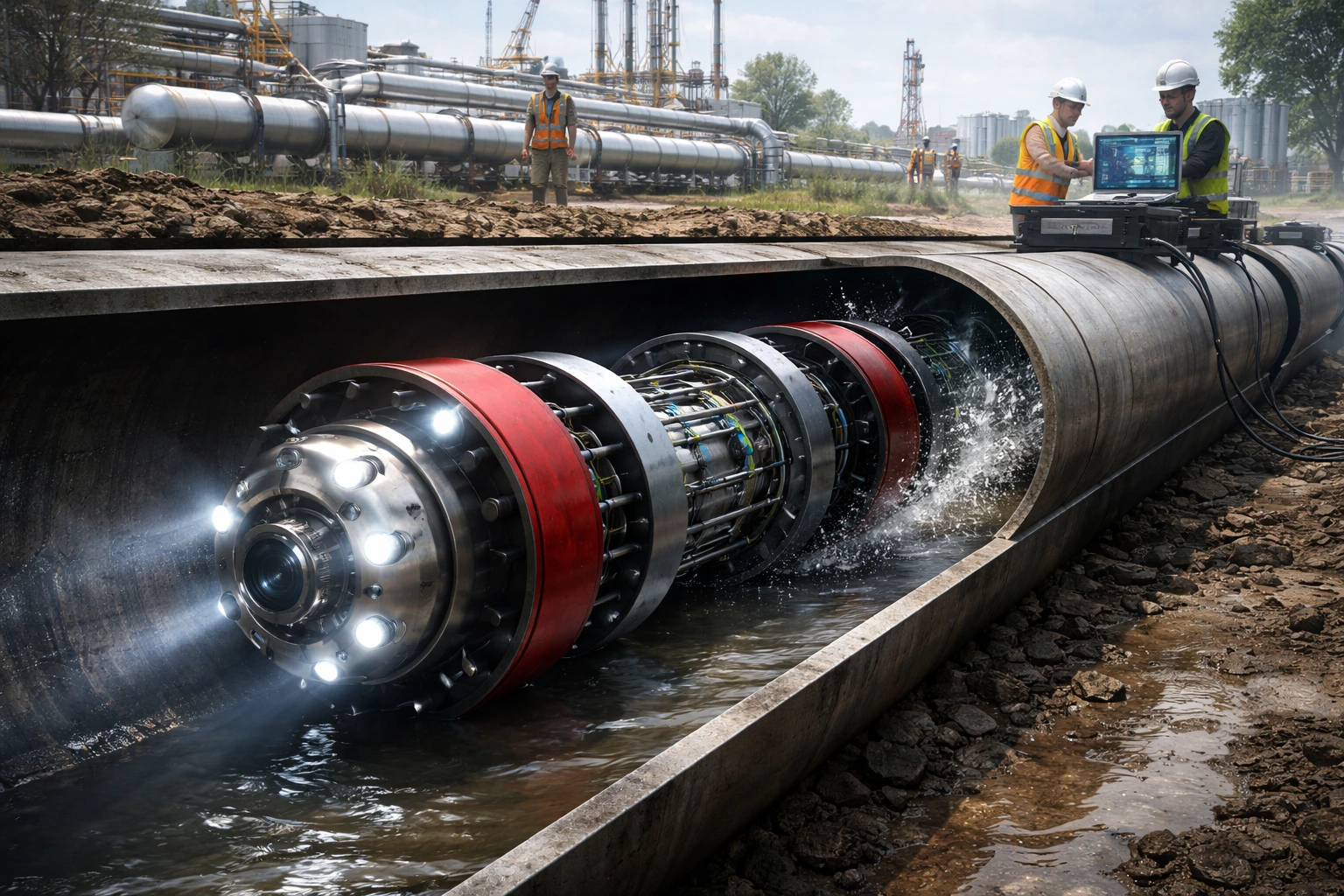
Intelligent pigging improves pipeline performance by providing real-time data on pipeline conditions while cleaning and maintaining flow efficiency. Unlike conventional pigging, which focuses primarily on debris removal, intelligent pigging combines cleaning with advanced diagnostics to detect corrosion, dents, and buildup that can impact operations. In modern pipeline integrity inspection programs, this approach allows operators to make informed decisions, reduce downtime, and maintain regulatory compliance. Understanding how does intelligent pigging work is essential for operators looking to improve safety, extend pipeline lifespan, and optimize performance in demanding oil and gas environments.
What Is Intelligent Pigging?
Intelligent pigging refers to the use of advanced pipeline pigs equipped with sensors and data collection systems to monitor pipeline conditions during operation. These tools go beyond traditional cleaning by integrating pipeline integrity inspection capabilities into routine pigging runs.
In practical terms, intelligent pigging allows operators to gather detailed information about the internal state of a pipeline without shutting it down. This includes detecting metal loss, deformation, debris accumulation, and other integrity concerns. Understanding how does intelligent pigging work begins with recognizing that these tools are designed to operate within live pipelines while continuously collecting data.
As a result, intelligent pigging plays a critical role in modern pipeline maintenance strategies, especially in industries where safety and efficiency are priorities.
How Does Intelligent Pigging Work?
To understand how does intelligent pigging work, it is important to look at both the mechanical and data-driven aspects of the process. Intelligent pigging tools are inserted into the pipeline and propelled by product flow, similar to conventional pigs. However, these tools are equipped with sensors that collect data as they travel through the pipeline.
During a run, intelligent pigging systems measure variables such as wall thickness, pipeline geometry, temperature, and pressure. This data is used in pipeline integrity inspection to identify potential issues before they lead to failures.
In addition to data collection, intelligent pigging can also include cleaning functions. Some tools are designed to remove debris while simultaneously capturing data, improving both cleanliness and inspection accuracy. This dual function is a key advantage of intelligent pigging over traditional methods.
Key Benefits of Intelligent Pigging
The adoption of intelligent pigging provides several important benefits for pipeline operators. These advantages are directly tied to improved performance and reduced operational risk.
Improved Pipeline Visibility
One of the main benefits of intelligent pigging is the ability to gain detailed insight into pipeline conditions. Through pipeline integrity inspection, operators can identify corrosion, dents, and other issues that may not be visible from the outside.
Enhanced Safety
By detecting potential failures early, intelligent pigging reduces the risk of leaks, ruptures, and unplanned shutdowns. Understanding how does intelligent pigging work allows operators to take proactive measures to maintain safe operations.
Increased Operational Efficiency
Clean pipelines operate more efficiently. Intelligent pigging ensures that debris is removed while also verifying pipeline condition, leading to improved flow rates and reduced energy consumption.
Regulatory Compliance
Many regulations require routine pipeline integrity inspection. Intelligent pigging helps operators meet these requirements by providing documented data and analysis.
Intelligent Pigging vs Conventional Pigging
While both methods serve important roles, there are clear differences between intelligent pigging and conventional pigging. Understanding how does intelligent pigging work highlights why it is becoming the preferred approach in many operations.
Conventional pigging focuses on cleaning and product separation. It is effective for removing debris but does not provide detailed information about pipeline conditions.
In contrast, intelligent pigging combines cleaning with pipeline integrity inspection, offering both operational and diagnostic benefits. This integration allows operators to reduce the number of runs required while improving data quality.
Another key difference is the ability of intelligent pigging to support long-term maintenance planning. By analyzing collected data, operators can predict future issues and schedule maintenance more effectively.
Applications of Intelligent Pigging in Pipeline Systems
Intelligent pigging is used across a wide range of applications in oil and gas, as well as other industries that rely on pipeline systems.
Gas Transmission Pipelines
In gas pipelines, intelligent pigging is used to monitor internal conditions and ensure safe operation. Pipeline integrity inspection is especially important in high-pressure systems where failures can have significant consequences.
Liquid Pipelines
For crude oil and refined products, intelligent pigging helps maintain flow efficiency while identifying buildup and corrosion.
Pre-Inspection Cleaning
Before running advanced inspection tools, pipelines must be cleaned. Intelligent pigging ensures that debris is removed while verifying that the pipeline is ready for detailed inspection.
Ongoing Maintenance Programs
Regular use of intelligent pigging supports continuous monitoring and maintenance. Understanding how does intelligent pigging work allows operators to integrate these tools into long-term strategies.
Factors That Impact Intelligent Pigging Performance
The effectiveness of intelligent pigging depends on several factors that must be considered during planning and execution.
Pipeline Conditions
Pipeline diameter, bends, and flow conditions all influence how well intelligent pigging performs. These factors also affect the accuracy of pipeline integrity inspection data.
Tool Selection
Different tools are designed for specific applications. Selecting the right intelligent pigging tool ensures both effective cleaning and reliable data collection.
Data Interpretation
Collecting data is only part of the process. Proper analysis is essential to fully understand the results of pipeline integrity inspection and make informed decisions.
Operational Planning
Careful planning ensures that intelligent pigging runs are successful and deliver the desired outcomes. Understanding how does intelligent pigging work helps operators optimize scheduling and execution.
The Role of Intelligent Pigging in Modern Pipeline Management
As pipeline systems become more complex, the role of intelligent pigging continues to expand. Operators are increasingly relying on these tools to support both daily operations and long-term asset management.
By integrating cleaning and pipeline integrity inspection, intelligent pigging provides a comprehensive approach to pipeline maintenance. This approach reduces costs, improves safety, and enhances overall performance.
Understanding how does intelligent pigging work is essential for organizations looking to stay competitive and meet evolving regulatory requirements. As technology continues to advance, intelligent pigging will remain a key component of effective pipeline management strategies.
Improving Pipeline Performance with Intelligent Pigging Solutions
Implementing the right intelligent pigging approach can make a significant difference in pipeline performance, safety, and reliability. Inline Services supports operators with solutions that combine cleaning and pipeline integrity inspection to help maintain efficient operations. Contact our team to learn how we can support your pipeline system.