
The most effective black powder solution combines mechanical removal by pigging with filtration that captures whatever stays entrained in the gas stream. Black powder is the abrasive iron-based sediment that forms inside gas pipelines through corrosion, and it cannot be cleared in a single pass. Prevention works as a program: scheduled cleaning pig runs that lift accumulated deposits before they consolidate, magnetic collection for the magnetite fraction, and a black powder filter at metering and compressor stations to protect downstream equipment. Inline Services builds that program around the pig selection, run sequence, and cleaning frequency your line actually requires, so the black powder solution is sized to the deposit load instead of guessed at. The result is stable throughput, lower compression costs, and clean pipe ahead of in-line inspection.
What is Black Powder?
Black powder consists of iron compounds including magnetite (mill scale), iron sulphide, sand, clay, salt, weld slag and even iron. The powder is created during gas production, or in wet gas pipelines where hydrogen sulphide, carbon dioxide or oxygen are present in the gas, or by bacterial corrosion of the steel. These deposits are normally black in color and can be in a dry, dust form or wet when combined with hydrocarbon liquids, compressor oils, etc. The wet form is the harder case for any black powder solution, since it packs against the pipe wall instead of fluidizing with the gas. The powder is then distributed through the pipeline with the gas flow, but is deposited when the velocity is not high enough to keep it moving (Dr John Smart – “Movement of Black Powder in Pipelines”). As sediment is deposited, the flow in the pipeline is disrupted and reduced, thereby allowing more sediment to accumulate. System throughputs are affected and energy costs increased to maintain design flow rates. Blockage can occur especially during cleaning and damage caused to plants such as compressors.
Because the deposits keep reforming, a durable black powder solution has to address both the sediment already in the line and the corrosion mechanism producing it. Particle size is the second complication. Much of the material falls below 10 microns, fine enough to pass a coarse strainer and blind a black powder filter quickly, which is why a black powder filtration system is sized on particle distribution rather than flow rate alone.

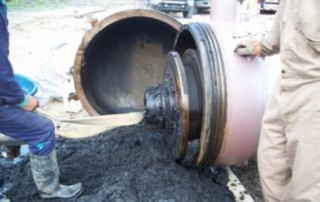
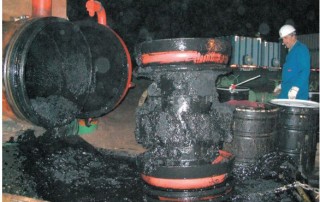
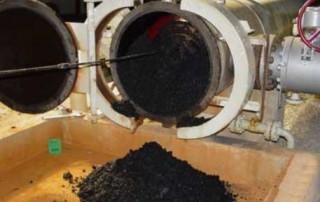
How does Pipeline Pigging Prevent Black Powder Build-Up?
Pigging plays an important role in the management and prevention of the formation of black powder. Inline Services designed our BD6 Foam Disc pig to have superior wiping action, when considering liquids removal, especially after hydrostatic testing and using a Pit Cleaning Pig™ for removing debris from corrosion pitting. If there are a large amount of deposits, removing too much at once could plug the line and methods such as progressive pigging or bypass pigging will minimize the risk. Pigging is the mechanical half of a complete black powder solution: it removes the mass, while a black powder filter downstream captures the fines that stay suspended in the gas. Magnet-equipped cleaning pigs are commonly added to the train because magnetite and iron sulphide respond to magnetic collection where brushes alone leave fines behind. On heavily loaded lines that filter is part of a permanent black powder filtration system rather than a temporary spool piece, and the run interval becomes the variable that keeps the black powder solution working between cleanings.
Frequently Asked Questions
What causes black powder in gas pipelines?
Corrosion inside the pipe. Hydrogen sulphide, carbon dioxide, oxygen and water react with the steel wall to form iron sulphide and iron oxides, and sulphate-reducing bacteria accelerate the process in wet or stagnant sections. Mill scales left from manufacture and construction debris add to the load. Because the reaction continues for as long as those conditions exist, a black powder solution manages the deposits on a schedule instead of treating them once.
How do you know if a pipeline has black powder?
The first signals are operational rather than visual: rising differential pressure across a black powder filter, meters and analyzers fouling between calibrations, compressor seal and valve wear showing up early, and throughput dropping at unchanged compression. Confirmation comes from a baseline cleaning pig run, then weighing and sampling the debris recovered at the trap to establish how much material the line is actually holding.
How often should a pipeline be pigged to control black powder?
There is no fixed interval. Frequency is set by the deposit load the first cleaning runs recover, then adjusted as recovered volume trends up or down. Lines carrying wet gas, running at low velocity, or with a history of bacterial corrosion need more frequent runs. The goal is to keep each run small enough that the debris removed never exceeds what the trap and the downstream black powder filtration system can handle.
Can filtration remove black powder without pigging?
No. A black powder filter captures only the fraction the gas is actually carrying, while the bulk of the material sits as settled deposits in low-velocity sections that never reach the filter. Filtration protects downstream equipment; pigging removes the reservoir feeding it. A black powder solution that uses one without the other will either blind filter elements continuously or leave the pipe wall loaded.
Is black powder dangerous to handle?
Yes. Iron sulphide is pyrophoric and can self-ignite when dry debris is exposed to air, which makes trap openings and filter changeouts the highest-risk steps in the work. Standard practice is to keep recovered debris damp and containerized, avoid dry sweeping, and dispose of the material under the applicable waste rules. Building that handling step into the black powder solution matters as much as the cleaning itself.
How can Inline Services help?
Black powder is a significant problem in natural gas pipelines. Helping our clients take a more proactive approach to black powder removal is why Inline Services remains an innovator in the pipeline pigging industry. A workable black powder solution starts with knowing how much debris the line is actually holding, because that number drives pig selection and how gradually the deposits can be taken out. It is essential to remove black powder and clean the pipeline thoroughly prior to running In Line Inspection Tools or “ILI” tools. Costly down time and line failures caused by the powder can be avoided by following a thorough cleaning procedure that includes using a variety of pipeline cleaning pigs. To ensure Black Powder doesn’t become a problem, Inline Services can assist in developing a comprehensive pigging program to help avoid the potential for blocking the line or having to deal with large volumes of debris after cleaning.
Cleaning and filtration work together. Once pigging has taken out the bulk deposits, a black powder filtration system at compressor inlets, metering skids, and station takeoffs protects the equipment most sensitive to abrasive fines: seal faces, valve seats, meter internals, and turbine blades. Sizing matters more than raw capacity, because the sub-10-micron fraction passes coarse elements and blinds a fine black powder filter fast, so filter differential pressure is worth trending as a black powder indicator rather than treating it as routine maintenance. One safety note belongs in every procedure: iron sulphide is pyrophoric and can ignite on contact with air, so filter changeouts and pig trap openings need controlled handling. Inline Services can build the pigging side of that black powder solution around your line’s real condition.
