
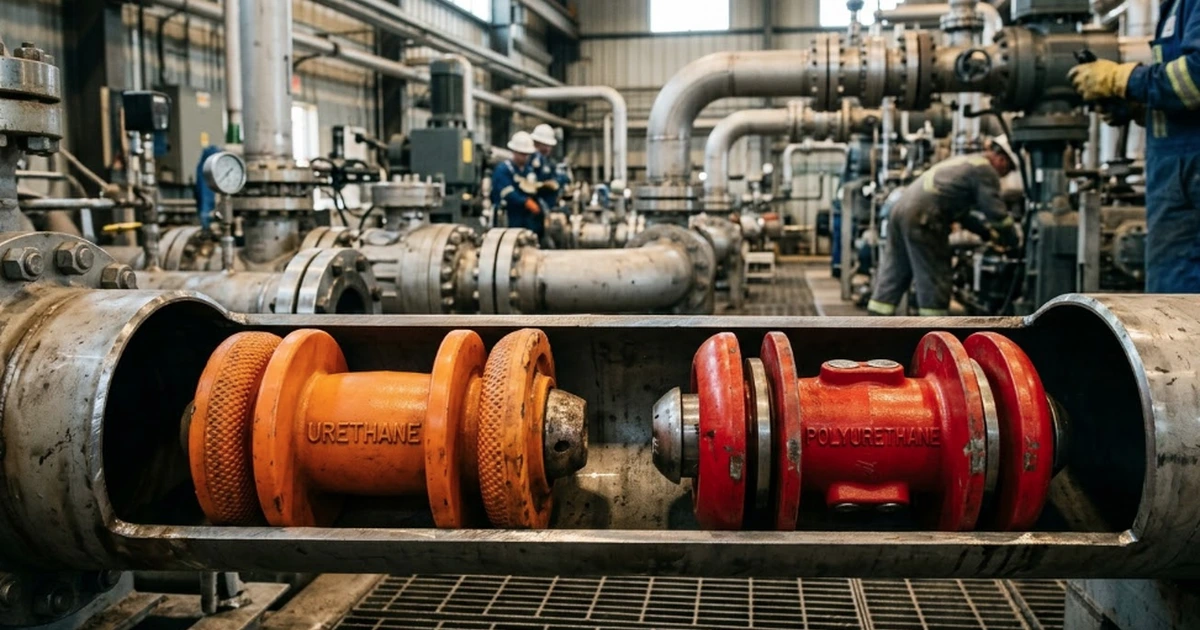
The terms urethane vs polyurethane are often used interchangeably in pipeline pigging, but they are not exactly the same. In simple terms, urethane refers to a chemical compound, while polyurethane is a polymer made from urethane links. In pipeline pigging, polyurethane is the actual material used to manufacture pigs due to its durability, flexibility, and resistance to wear. Understanding the difference between urethane and polyurethane is important when selecting the right pig for cleaning, sealing, or inspection applications. Across many polyurethane applications, especially in oil and gas pipelines, the material’s performance directly impacts efficiency, longevity, and overall pipeline integrity.
What Is the Difference Between Urethane and Polyurethane?
To understand urethane vs polyurethane, it helps to start with the chemistry. Urethane is a chemical group, while polyurethane is a material formed by combining multiple urethane units into a polymer chain. This distinction is key when evaluating the difference between urethane and polyurethane in industrial applications.
In pipeline pigging, operators are not using pure urethane. Instead, they rely on polyurethane because of its ability to be engineered with specific hardness, flexibility, and abrasion resistance. These characteristics make polyurethane ideal for demanding polyurethane applications such as pipeline cleaning, batching, and sealing.
When discussing urethane vs polyurethane, it is more accurate to say that polyurethane is the functional material used in pig manufacturing, while urethane refers to the underlying chemistry that gives the material its properties.
Why Polyurethane Is Used in Pipeline Pigging
In the debate of urethane vs polyurethane, polyurethane is the preferred material because of its superior performance in harsh pipeline environments. The difference between urethane and polyurethane becomes especially important when considering durability and adaptability.
Polyurethane offers several advantages in polyurethane applications related to pipeline pigging:
- High abrasion resistance for removing debris like wax and scale
- Flexibility to navigate bends, valves, and diameter changes
- Strong sealing capability for efficient product separation
- Resistance to chemicals and hydrocarbons
These properties make polyurethane pigs highly effective in both liquid and gas pipelines. When evaluating urethane vs polyurethane, it becomes clear that polyurethane delivers the performance needed for consistent and reliable pigging operations.
Types of Polyurethane Pipeline Pigs
Different designs of pigs rely on polyurethane to perform specific functions. Understanding urethane vs polyurethane helps clarify why polyurethane is used across multiple pig types.
Cup Pigs
Cup pigs use polyurethane cups to create a tight seal against the pipeline wall. This allows them to push liquids and debris efficiently. The difference between urethane and polyurethane matters here because polyurethane can be formulated to maintain sealing performance under varying pressures.
Disc Pigs
Disc pigs feature multiple polyurethane discs that provide both sealing and cleaning. These pigs are widely used in polyurethane applications where flexibility and durability are required.
Solid Cast Pigs
Solid cast polyurethane pigs are molded from a single piece of material. In the context of urethane vs polyurethane, these pigs highlight how engineered polyurethane can deliver long wear life and consistent performance.
Brush Pigs with Polyurethane Components
Some pigs combine brushes with polyurethane elements for aggressive cleaning. This combination enhances debris removal while maintaining structural integrity.
Each of these designs demonstrates the practical importance of understanding urethane vs polyurethane in selecting the right pig for the job.
How Material Properties Impact Pigging Performance
The difference between urethane and polyurethane becomes more apparent when looking at material performance in real-world operations. Polyurethane can be customized in terms of hardness (durometer), elasticity, and resistance to wear.
In pipeline pigging, these properties directly influence how well pigs perform in different polyurethane applications. For example:
- Softer polyurethane allows pigs to navigate tight bends and irregular pipe geometry
- Harder polyurethane improves scraping ability for removing stubborn deposits
- Specialized blends increase resistance to hydrocarbons and temperature variations
When comparing urethane vs polyurethane, polyurethane’s ability to be engineered for specific conditions is what makes it indispensable in pipeline pigging.
Urethane vs Polyurethane in Harsh Pipeline Conditions
Pipeline environments can be extremely demanding, with high pressures, varying temperatures, and abrasive materials. This is where the difference between urethane and polyurethane becomes critical.
Polyurethane is specifically designed to withstand these conditions, making it ideal for heavy-duty polyurethane applications such as crude oil pipelines, gas transmission lines, and chemical processing systems.
In evaluating urethane vs polyurethane, polyurethane provides:
- Longer service life under abrasive conditions
- Better resistance to deformation under pressure
- Consistent performance across varying flow rates
These advantages ensure that polyurethane pigs maintain effectiveness even in the most challenging pipeline environments.
Choosing the Right Material for Your Application
Selecting the right pig material requires a clear understanding of urethane vs polyurethane and how each relates to pipeline requirements. While urethane defines the chemistry, polyurethane is the material that delivers performance in real-world polyurethane applications.
Operators must consider several factors when evaluating the difference between urethane and polyurethane:
- Type of pipeline (gas, liquid, multiphase)
- Nature of debris (wax, scale, black powder)
- Pipeline geometry and diameter changes
- Operating pressure and temperature
By aligning these factors with the properties of polyurethane, operators can ensure optimal pigging results. Understanding urethane vs polyurethane helps prevent premature wear, inefficient cleaning, and operational issues.
Selecting the Right Polyurethane Pig for Your Pipeline
Choosing between materials in urethane vs polyurethane applications can directly impact cleaning performance, wear life, and overall pipeline efficiency. Inline Services can help you evaluate your pipeline conditions and select the right polyurethane pig for your operation. Reach out to our team to get started.


