
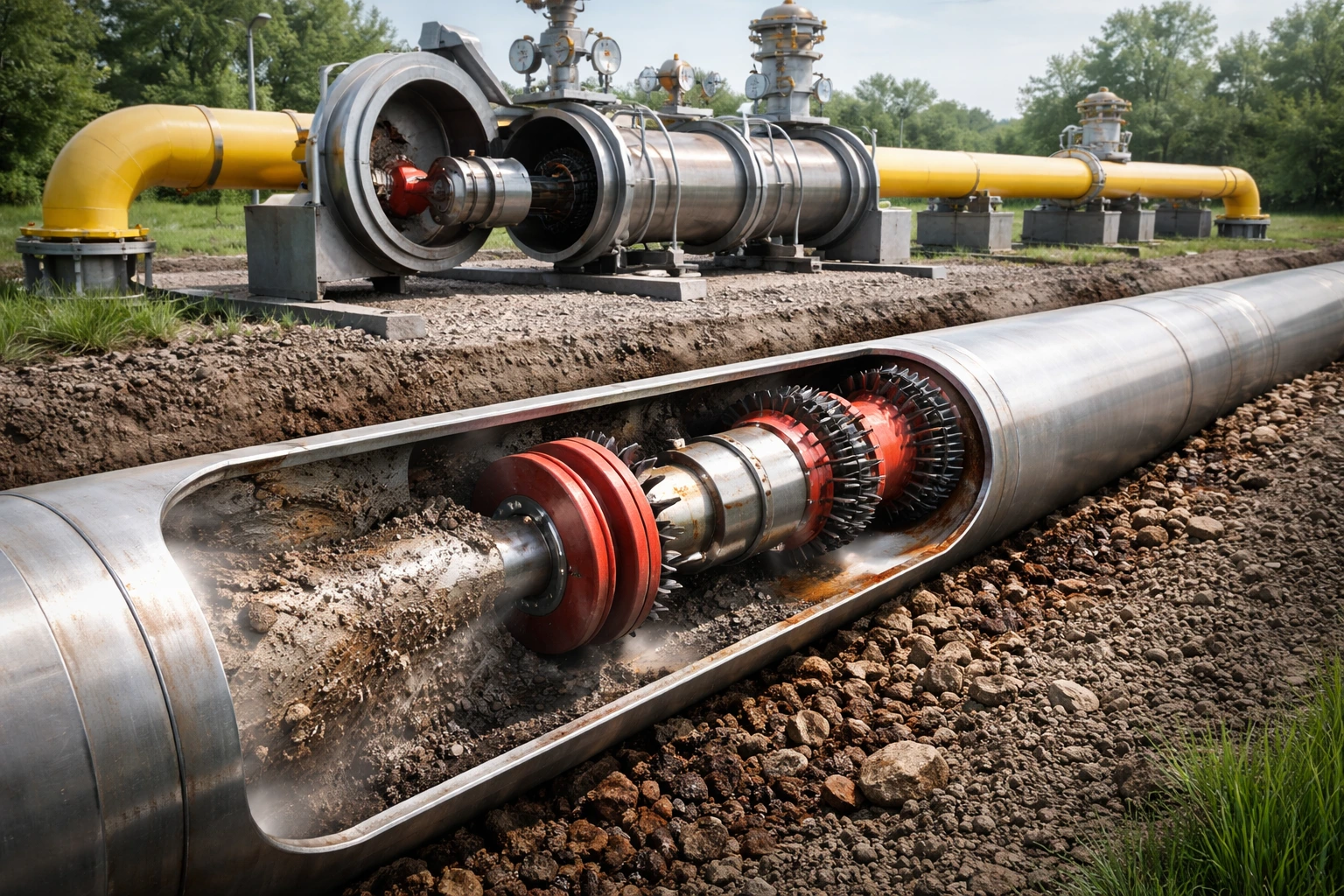
The benefits of pipeline pigging include improved flow efficiency, reduced operational costs, enhanced safety, and better pipeline integrity. The pipeline pigging process removes debris, separates products, and prepares pipelines for inspection, making it a critical part of routine maintenance. Across industries, understanding what industries use pipeline pigging helps highlight its importance in maintaining reliable operations. When performed correctly, pipeline pigging supports long-term performance, reduces downtime, and ensures pipelines operate at optimal capacity.
Why Pipeline Pigging Is Essential for Pipeline Systems
The benefits of pipeline pigging begin with its role in maintaining internal pipeline cleanliness. Over time, pipelines accumulate debris such as wax, scale, and black powder, which can restrict flow and increase pressure. The pipeline pigging process is designed to remove these materials and restore efficiency.
In many cases, operators may underestimate what industries use pipeline pigging, but it is widely applied across oil and gas, water systems, chemical processing, and more. These industries rely on consistent pipeline performance, making pigging an essential maintenance practice.
Without regular pigging, buildup can lead to corrosion and operational inefficiencies, reducing the lifespan of the pipeline.
Key Benefits of Pipeline Pigging
Understanding the benefits of pipeline pigging helps operators justify its role in both routine maintenance and long-term asset management.
Improved Flow Efficiency
One of the primary benefits of pipeline pigging is improved flow. The pipeline pigging process removes deposits that restrict movement, allowing fluids and gases to move more freely through the pipeline.
Reduced Operational Costs
By maintaining clean pipelines, operators can reduce energy consumption and minimize wear on equipment. The benefits of pipeline pigging also include fewer shutdowns and lower maintenance costs over time.
Enhanced Pipeline Integrity
Regular pigging supports pipeline integrity inspection by ensuring pipelines are clean and ready for inspection tools. This is especially important in industries that depend on safe and reliable operations. Understanding what industries use pipeline pigging shows how critical this benefit is across sectors.
Increased Safety
Blockages and pressure buildup can lead to serious safety risks. The pipeline pigging process helps prevent these issues by maintaining consistent flow conditions. The benefits of pipeline pigging include reducing the likelihood of leaks or failures.
How the Pipeline Pigging Process Works
The pipeline pigging process involves inserting a pig into the pipeline and using flow pressure to move it through the system. As it travels, the pig removes debris, separates products, or collects data.
Understanding the benefits of pipeline pigging requires recognizing how this process improves both cleanliness and efficiency. Depending on the application, pigs can be designed for cleaning, inspection, or batching.
In many cases, operators evaluating what industries use pipeline pigging find that the process is adaptable to different pipeline conditions, making it a versatile solution for a wide range of applications.
What Industries Use Pipeline Pigging
Understanding what industries use pipeline pigging highlights the versatility and importance of this practice. The benefits of pipeline pigging extend across multiple sectors.
Oil and Gas Industry
The oil and gas sector is the largest user of pigging. The pipeline pigging process is essential for removing buildup, maintaining flow, and preparing pipelines for inspection.
Water and Wastewater
Municipal systems rely on pigging to maintain clean pipelines and ensure efficient water distribution. The benefits of pipeline pigging include preventing contamination and improving system reliability.
Chemical Processing
In chemical pipelines, pigging is used to prevent product contamination and ensure safe transport. Understanding what industries use pipeline pigging shows its importance in maintaining product quality.
Food and Beverage
Pigging systems are used to recover products and maintain sanitary conditions. The pipeline pigging process helps reduce waste and improve efficiency in production lines.
Operational Advantages of Regular Pigging
The benefits of pipeline pigging are most evident when it is performed regularly as part of a maintenance program. Consistent pigging helps prevent buildup and ensures pipelines remain in optimal condition.
Operators who understand what industries use pipeline pigging often recognize that regular maintenance is key to avoiding costly issues. The pipeline pigging process allows for proactive management rather than reactive repairs.
Regular pigging also supports better planning and scheduling, reducing the likelihood of unexpected downtime and improving overall system performance.
Long-Term Value of Pipeline Pigging
The long-term benefits of pipeline pigging go beyond immediate performance improvements. Over time, pigging helps extend the lifespan of pipelines by preventing corrosion and reducing wear.
The pipeline pigging process also supports compliance with regulatory requirements by ensuring pipelines are maintained and inspected regularly. For organizations evaluating what industries use pipeline pigging, this long-term value is a key factor in adoption.
By maintaining clean and efficient pipelines, operators can reduce risk and improve overall reliability.
Maximizing the Benefits of Pipeline Pigging
To fully realize the benefits of pipeline pigging, operators must implement the right strategy and tools. This includes selecting the appropriate pig type, scheduling regular runs, and monitoring performance.
The pipeline pigging process should be tailored to the specific conditions of the pipeline, including product type, flow rate, and geometry. Understanding what industries use pipeline pigging helps operators apply best practices from across different sectors.
By taking a proactive approach, operators can maximize efficiency, reduce costs, and maintain safe operations.
Improving Pipeline Efficiency with Effective Pigging Strategies
Achieving the full benefits of pipeline pigging requires the right approach to maintenance and execution. Inline Services supports pipeline operations with solutions designed to improve the pipeline pigging process and maintain system performance. Give our team a call or message us today to find the right solution for your application.